Guides
Blood Sugar Guides: A Plain-Language Reading List
These blood sugar guides are five plain-language articles from the Glyco Defender facts desk. They cover A1C and fasting numbers, insulin resistance, mixing supplements with diabetes medicines, what blood sugar support means, and how to choose a supplement. Each one links its NIH, CDC or FDA sources. Below them sit two short primers: reading a label and questions for your doctor.
Written by the Glyco Defender facts deskUpdated
The guides01
What blood sugar guides are there?
There are five blood sugar guides, each answering one big question in plain words and linking every fact to a public source.
They are written for adults who want to understand their numbers and their options. None of them sells anything. They explain where a supplement such as Glyco Defender fits, and where it does not.
Start with numbers if you have a recent test result. If you already take a diabetes drug, start with medicines.
Blood sugar numbers
What A1C and fasting glucose readings mean, where the normal, prediabetes and diabetes ranges start, and why one test is not a diagnosis.
Insulin resistance basics
How insulin moves sugar into cells, what happens when cells respond less, and the daily habits studied most.
Supplements and diabetes medicines
Which ingredients may add to insulin or a sulfonylurea, what a low looks like, and how to talk to your care team first.
What is blood sugar support?
What the phrase means on a supplement label, what the law allows it to say, and what it cannot promise.
Choosing a blood sugar supplement
A checklist for any product: printed doses, studied doses, cautions, a real guarantee and honest ads.
Primers below
Two short how-tos on this hub: reading a Supplement Facts panel and the questions worth bringing to your next visit.
Where to start02
Which blood sugar guide should I read first?
Read the guide that matches your situation today: a new test result, a current prescription, or a supplement you are weighing.
Most readers need only one or two guides. The table pairs common starting points with the guide that answers them.
| Your situation | Read first | Why |
|---|---|---|
| A new A1C or fasting result | Blood sugar numbers | Explains the NIDDK ranges and the need for a repeat test |
| Told you have prediabetes | Insulin resistance basics | Covers the habits that cut risk in the DPP trial |
| On insulin, metformin or a sulfonylurea | Supplements and diabetes medicines | Lows, interactions and what to ask |
| Curious what the label words mean | What is blood sugar support? | Separates legal label wording from proof |
| Comparing products | Choosing a blood sugar supplement | A checklist you can use on any bottle |
Primer 103
How do you read a supplement label?
Read a supplement label from the Supplement Facts box outward: serving size first, then each amount, then the blend, the other ingredients and the cautions.
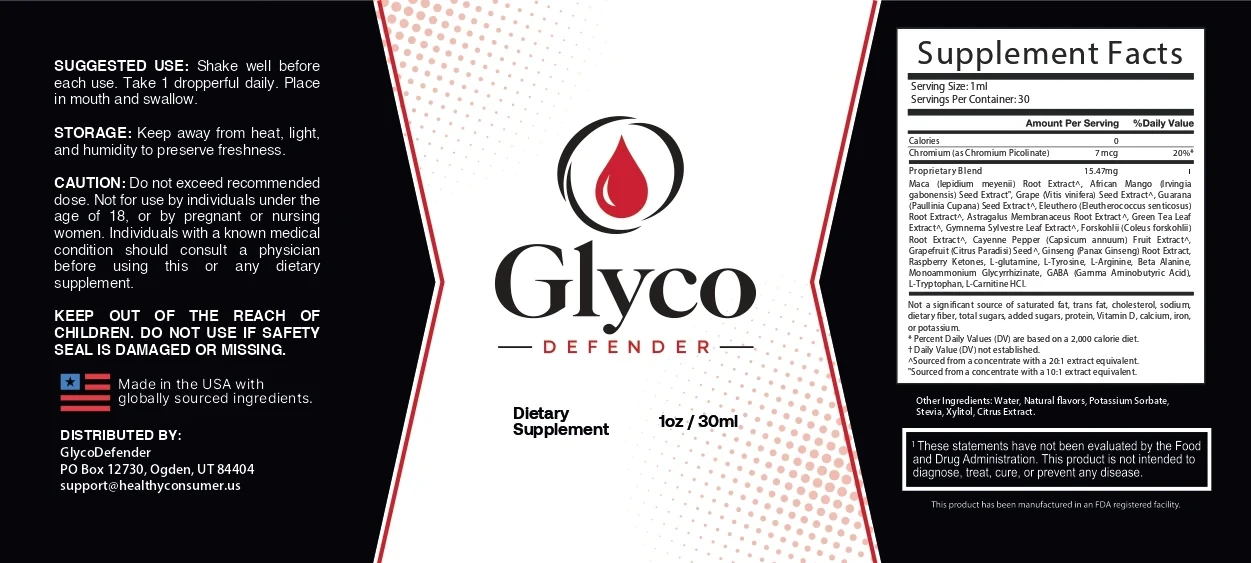
The serving size tells you what every number refers to. On Glyco Defender, that is 1 mL, one dropperful.
A line with an amount and a % Daily Value is the most useful line on any label. A proprietary blend shows only a total weight and a list in order from most to least.
Serving and servings
Check the serving size and how many come in the bottle. Divide to see how long it lasts.
Printed amounts
Compare each amount with its Daily Value and with doses used in studies.
Blend math
Divide the blend total by the number of ingredients for an even split. Glyco Defender: 15.47 mg across 21 is about 0.74 mg each.
Other ingredients
Look for sweeteners, colors and allergens. Xylitol, for example, is dangerous to dogs (FDA, Paws Off Xylitol).
Cautions and maker
Read who should not take it, and who made or distributed it.
Primer 204
Why does the order of a proprietary blend matter?
The order matters because a blend must list ingredients from most to least by weight, which sets a ceiling on each one.
Federal rules let a blend hide single amounts as long as it shows its total and that order (21 CFR 101.36 (eCFR)). So the ingredient in place k can weigh at most the total divided by k.
On Glyco Defender, gymnema sits eighth. That caps it at about 1.9 mg per dropper, while studies used 200-400 mg a day (Drugs.com, Gymnema monograph). Footnotes such as "20:1 extract equivalent" describe how the extract was made. They do not make the blend any heavier.
Primer 305
What should you ask your doctor about a blood sugar supplement?
Ask your doctor whether the supplement could interact with your medicines, whether it could cause lows, and how you will know if it is doing anything at all.
Take the bottle, or a clear photo of its label, with you. Your doctor or pharmacist needs the full ingredient list, not the brand name alone.
The ADA advises discussing any supplement with your care team first, since some can cause lows with diabetes medicines (ADA, Vitamins & Supplements).
- Could any ingredient add to my insulin, metformin or sulfonylurea?
- Does the caffeine from guarana or green tea matter with my heart or blood pressure?
- Should I check my blood sugar more often for the first few weeks?
- Which numbers will we use to judge any change, and when?
- Is anything on the label a problem with my thyroid medicine or blood thinner?
A supplement is never a reason to skip or change a prescribed dose. Make any change only with your doctor.
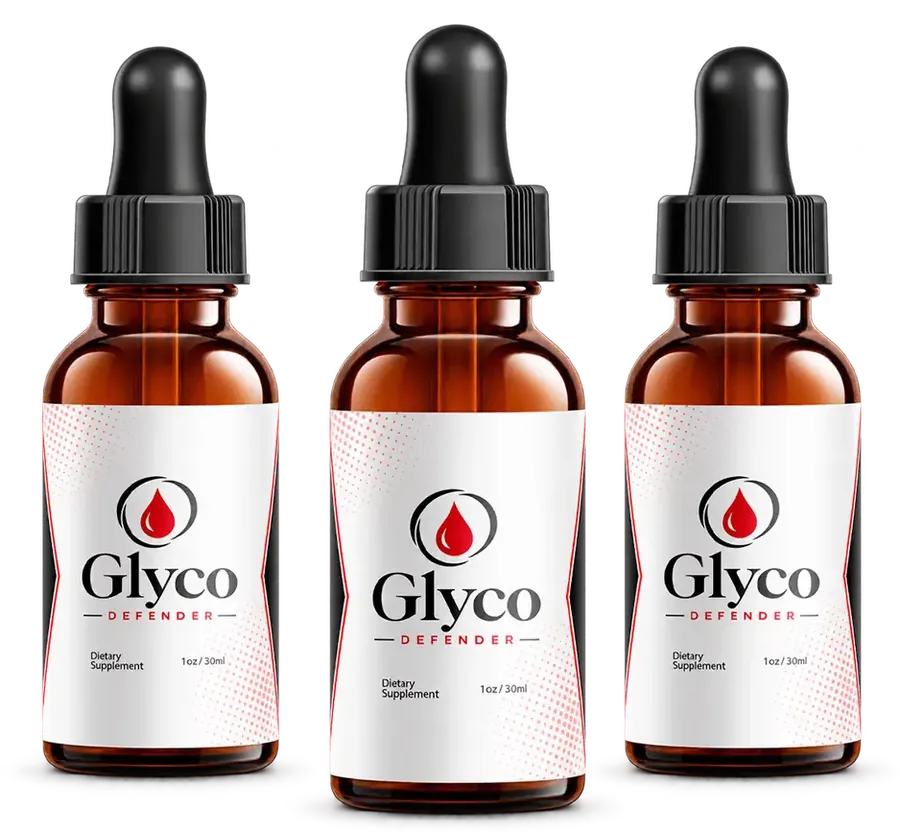
Glyco Defender: from $49 a bottle30 mL · 1, 3 or 6 bottles · free US shipping on 6 · 60-day money-back
See packsPrimer 406
How can you spot a misleading supplement ad?
A misleading supplement ad usually borrows proof from single-ingredient studies, shows logos of famous institutions, and leans on stories instead of trials of the product itself.
The FTC expects health claims to rest on evidence about the specific product, dose and population (FTC, Health Products Compliance Guidance). FDA has sent warnings to companies selling products that claim to treat diabetes (FDA, Illegally Sold Diabetes Treatments).
Watch for words like "reverse", big buyer counts with no source, and countdown timers. Compare any review with others across sites, as the FTC suggests (FTC, How To Evaluate Online Reviews).
Sources07
Where do the blood sugar guides get their facts?
The blood sugar guides get their facts from NIH, CDC, FDA, FTC and peer-reviewed reviews, and each claim links to the source it came from.
Product details come from the Glyco Defender label first and the sales page second. When the two disagree, the guides follow the label.
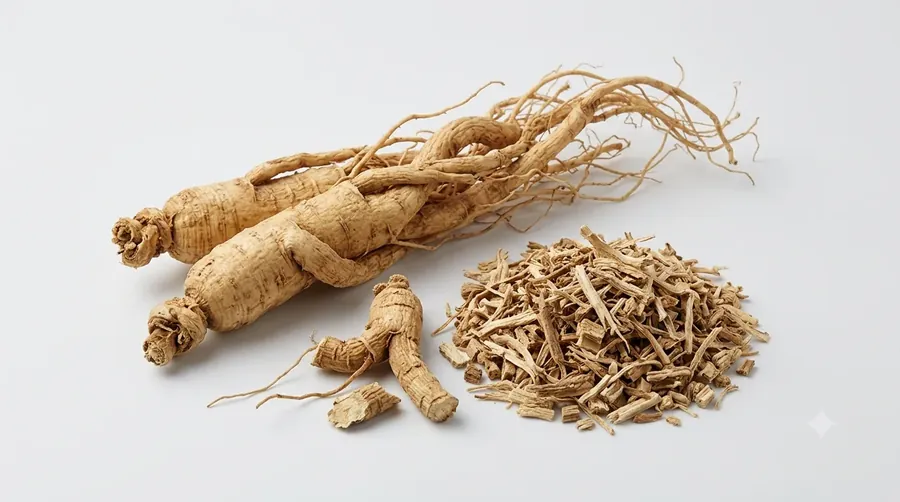
Plant photos in the guides are brand images of whole leaves, roots and seeds. The drops hold small amounts of extracts, not these foods.
Numbers such as 115.2 million US adults with prediabetes come from the CDC (CDC, National Diabetes Statistics Report).

Glossary08
What do common blood sugar terms mean?
A few terms come up in every guide; knowing them makes each article faster to read.
A1C
Your average blood sugar over about three months. Below 5.7% is normal; 5.7-6.4% is prediabetes (NIDDK, Diabetes & Prediabetes Tests).
Fasting glucose
Blood sugar after at least eight hours without food. Below 100 mg/dL is normal.
Daily Value
A reference amount for labels. Glyco Defender's 7 mcg of chromium is 20% of it.
Low blood sugar
Often below 70 mg/dL, with shaking, sweating or confusion (NIDDK, Low Blood Glucose).
FAQ09
Questions about the blood sugar guides
Are the blood sugar guides written by doctors?
No. The Glyco Defender facts desk writes them from public health sources, and every claim links to its source. A medical reviewer slot is shown on each guide and stays empty until a qualified reviewer has checked it.
Is Glyco Defender recommended by the blood sugar guides?
No. The guides explain numbers, habits and medicine safety, and they say plainly that no supplement treats diabetes. Where Glyco Defender comes up, it is as an example of label reading, with its small doses shown.
Which blood sugar guide covers prediabetes?
Start with blood sugar numbers for the ranges, then insulin resistance basics for the habits. In the Diabetes Prevention Program, lifestyle change cut the risk of type 2 diabetes by 58% in adults with prediabetes.
How often are the blood sugar guides updated?
We review them when a source changes or a reader reports an error. The date at the top of each guide shows the last update. Send corrections to [email protected].
Can I print the blood sugar guides for my doctor visit?
Yes. Print any guide or the label primer for personal use and bring it with the bottle itself. Your doctor will want the full ingredient list and your recent readings, not just the brand name.
Is there a guide on low blood sugar signs?
Yes. The supplements and diabetes medicines guide lists the signs of a low, the 15-15 step with fast carbs, and when to call 911. It matters most for anyone on insulin or a sulfonylurea.
Who wrote this10
Written and reviewed by
Pages built from the label, the sales page and linked NIH, FDA, CDC, FTC and peer-reviewed sources.
Last updated . Learn about our editorial standards and how we check reviews. This website is run by a U.S. stocking partner for Glyco Defender, not by the manufacturer or the distributor. We are paid when you buy through our order links.
Keep reading
More about Glyco Defender

U.S. stocking partner for Glyco Defender
Ready to try Glyco Defender?
Check your medicines first, then pick a pack. Six bottles give the lowest price per bottle and ship free in the US; every pack comes with the 60-day money-back guarantee.
- Order on the sales page
- 60-day money-back
- Free US shipping on 6